How to Start Acting from Zero, With No Experience at All
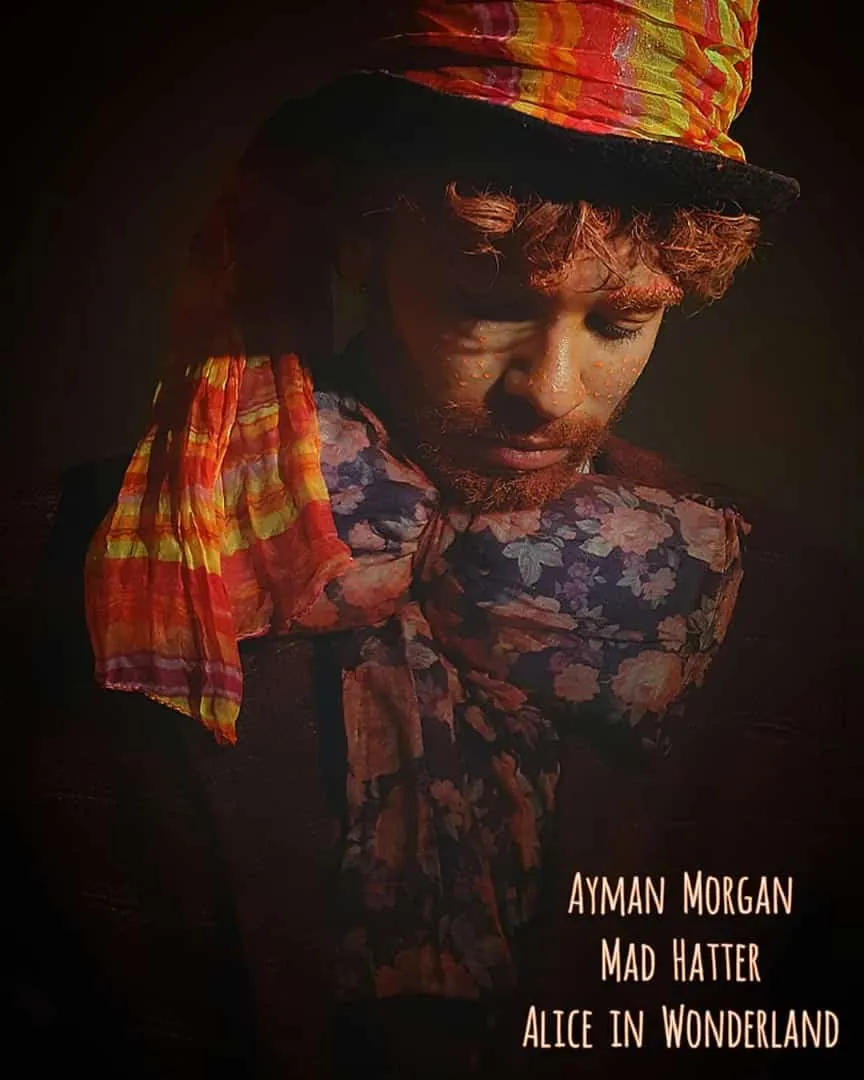
Sit down. Order a tea. Before we talk, answer me one question, honestly: are you afraid you're starting too late, or afraid you'll start and find out you're "not talented"?
If it's either one, welcome. That same fear has sat in this same chair thousands of times before you.
The "born actor" myth
There's one sentence that kills more dreams than anything else: "Actors are born, not made."
Look at the real stories. Adel Emam, the legend of Egyptian comedy, enrolled in the Faculty of Agriculture at Cairo University and found his way to the stage through student theatre, not through a master plan. Harrison Ford was working as a carpenter before he made it, and kept doing carpentry between small parts for years. And Morgan Freeman wasn't known to the wider public until he was nearly fifty.
None of them woke up one morning a star. What happened is they kept working. Talent is like a seed: it matters, yes, but without water, sun and patience it stays a seed in a drawer.
What you have right now, the passion that made you click on this article, is the first drop of water. The rest is work.
My own first time
I'll tell you a secret. The first time I stood on a stage, I was terrified. Not nervous. Terrified. And the funny part is that my whole role was two lines. That's it.
The fear wasn't about the two lines. It was about the eyes in the dark in front of me. When my moment finally came and I opened my mouth, the audience was still applauding another actor who had just finished his scene. I said my line over the applause, and almost nobody heard it.
But that moment taught me something. My body spoke for me: the emotion showed in my shoulders, my hands, my eyes, and the feeling got through even though the words were lost. The fear stayed sitting on my chest until the curtain call at the end, when I heard the audience applaud. Only then did it leave, and something completely different was born in its place.
A tiny role, and two lines nobody heard. Still, they were the beginning.
Drama school or the street?
It comes up at every table: "Do I have to go to drama school to become an actor?"
The honest answer: no, but studying saves you years.
Formal training gives you things that are hard to collect on your own:
- Solid tools: voice, breath, movement and text analysis. These are muscles built through regular practice, not inspiration.
- A stage where mistakes are free: four years to try, fall and get back up in front of teachers and classmates, without anyone buying a ticket.
- People: today's classmates are tomorrow's directors, writers and casting directors.
But the street and life are a real school too, as long as you're an awake student. Sit on the bus and watch: the woman whispering on the phone while her face says the opposite of her words, the man laughing while his hand grips his bag. That's all real "acting". Stanislavski, the father of modern acting methods, believed an actor should love the art in himself, not himself in the art. And that art feeds on observation.
So: if you can study, study. If you can't right now, start with what you have, and don't let that become your excuse to stop.
Real workshop or a money grab?
Time to be blunt, because this is where money and dreams get stolen.
Red flags: walk away
- They promise you a role: "Sign up with us and you'll be in a Ramadan series." Nobody can guarantee you a part. A workshop selling that guarantee is selling an illusion.
- The trainer has no work you can see: ask about their credits and watch them yourself. If every answer is "I've worked with big names" without names or links, quietly back away.
- Forty people in a class: you're there to practise, not to watch. If you won't stand up and work in front of the trainer almost every session, you're paying for a lecture.
- Mandatory paid photo shoots: "You need a shoot with us for this fee so we can send you to casting." That's a business, not training.
Green flags: worth it
- A small group, roughly 10 to 15 people.
- Work on real scenes and texts, not just games and energy exercises.
- A trainer who gives specific notes: "your hand escaped here", "you're rushing this line", not "lovely, keep going".
- Alumni you can contact and ask yourself.
Quick tip: ask to attend one class before you pay. A serious workshop won't be scared of that request.
Your first showreel, from your bedroom
Casting around the world now relies on the self-tape: a video you record yourself and send in. That means your phone is a real studio, if you know how to use it.
Gear (you probably have most of it)
- Phone: fix it at eye level and shoot horizontally.
- Light: a window in front of you, not behind you. Natural daylight beats any lamp.
- Background: a plain wall. Take down the posters and close the wardrobe.
- Sound: more important than the picture. Turn off the fan, and hang a blanket on the door if the room echoes. A small clip-on mic makes a big difference if you can get one.
Content
- Just two scenes, different from each other: one quiet and one intense, or one dramatic and one light. The goal is to show your range.
- Length: one minute to a minute and a half. Nobody will watch ten minutes.
- The first ten seconds: put your strongest moment there. A casting director may decide right then.
- No music over dialogue, no "trailer" editing: people want to see you.
- At the end: your name and a phone number or email, then upload it to YouTube.
When you're done, watch it on mute. If your face alone tells the story, you're on the right track. Then listen without looking at the screen. If your voice alone carries the feeling, you've got a real showreel.
The camera is not your enemy
The strange thing is that my first time in front of a camera had none of that stage terror. The opposite: I felt real pleasure from day one, and I knew I loved being there, just as I later learned to love being on stage.
The beauty of theatre is that it's a live moment: it happens once, in front of people breathing with you, and there's no "take two". The camera is kinder; you can redo a scene easily. But the best thing I've reached over the years isn't needing fewer takes. It's being able to let go in front of the camera as if it isn't there, exactly the way you forget the audience on stage, live the moment and enjoy what you're giving.
That's exactly what I want you to practise while you shoot your bedroom showreel: forget the phone, and live the scene.
Last words
Sanford Meisner, one of the most important acting teachers of the twentieth century, described acting as living truthfully under imaginary circumstances. Notice the word: "truthfully". Not impressively, not loudly, not prettily.
Start today with something small: pick a monologue, learn it, film it and watch it. You'll cringe at yourself, and that's normal. The tenth time will be better, and by the hundredth you'll be an actor.
In the next article we'll talk about voice and breath: the secret that makes an ordinary line hit the heart of the person sitting in the last row.
Further reading:
- Konstantin Stanislavski, My Life in Art.
- Sanford Meisner & Dennis Longwell, Sanford Meisner on Acting, Vintage Books, 1987.
Want to see all this in practice? Take a look at my acting work or the full filmography.